How to Re-Engage At-Risk Customers
How to Re-Engage At-Risk Customers
Published

Jenna Pitkälä
Product Designer
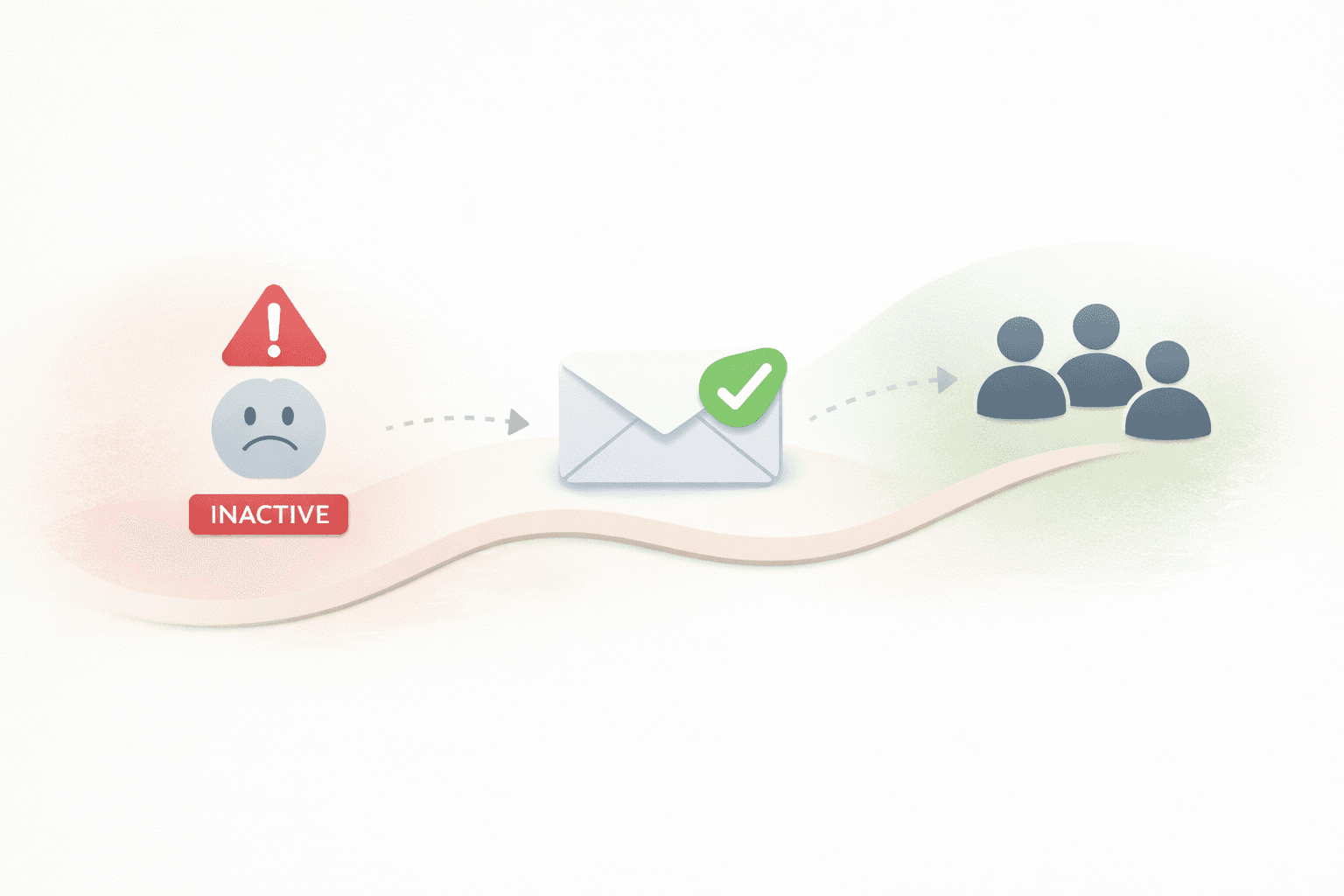
When your churn alert system flags customers at risk, the real work of keeping them begins. Focusing on a strong customer experience through proactive outreach is vital for loyalty and retention. According to McKinsey, businesses using customer analytics can achieve 115% higher Return on Investment (ROI) and 93% higher profits. The success of top SaaS companies often comes not just from identifying risk, but from how they systematically re-engage customers to prevent churn.
This is where Userlens comes in. We provide next-generation product intelligence for customer success. Specifically, Userlens empowers Customer Success teams to proactively identify, understand, and re-engage at-risk customers, turning potential churn into lasting loyalty.
Our account-level product analytics are designed specifically for Customer Success teams to truly understand customer adoption and prevent churn.
With AI-powered health scoring and real-time usage pattern analysis, Userlens helps CSMs go beyond simple alerts: they can take meaningful action to save at-risk accounts, truly helping them to understand your customers on a whole new level.
Understanding the Customer Re-Engagement Framework
Effective customer re-engagement requires a structured approach that considers account value, churn risk, and behavioral patterns. Many companies struggle with high churn rates and they might not know what to do about it with their current resources. This makes having a clear framework essential for prioritizing efforts and maximizing retention outcomes.
Key Components of Effective Re-Engagement
Successful re-engagement strategies are built on a foundation of targeted intervention and clear value communication. These components work together to create a comprehensive approach that addresses different customer needs and risk levels.
Component | Description |
|---|---|
Risk-based Segmentation | Group customers by churn risk to prioritize efforts. |
Personalized Outreach | Tailor messages to specific usage and account details. |
Value-driven Messaging | Link product benefits directly to customer goals. |
This framework provides the foundation for developing specific playbooks that address different types of customer accounts, ensuring that each receives the appropriate level of attention and resources.
Building Your Customer Re-Engagement Playbook
With a solid framework in place, the next step is creating specific strategies for different customer segments. These playbooks ensure consistent, effective outreach while allowing for customization based on account value and risk level.
High-Value Account Strategy: Personalized Intervention
For enterprise and high-value accounts, personalized intervention is critical. These accounts often represent significant revenue and require dedicated attention from a Customer Success Manager to address their specific needs and concerns.
Immediate Response Actions:
Direct CSM contact
Review of account-specific usage data and health score trends
Internal team meeting to develop intervention strategy
Personalized Engagement Tactics:
Executive-level communications that address strategic business objectives
Custom success plans based on current usage gaps and business goals
Dedicated support resources, such as technical experts or implementation consultants
Strategic business reviews that focus on Return on Investment (ROI) and growth opportunities
Reusable Outreach Snippet (High-Value Accounts):
Subject: Proactive Check-in: Optimizing Your Success with [Product Feature]
Body: Hi [Customer Name], Our analytics indicate you might benefit from optimizing your use of [Specific Feature or Workflow]. Based on your recent activity, we've identified [Specific Opportunity/Challenge]. I'd love to schedule a quick 15-minute call to discuss how we can help you unlock even more value.
Mid-Tier Account Strategy: Structured Outreach
Mid-tier accounts benefit from a structured but personalized approach that balances automated efficiency with human touch points. This strategy provides consistent engagement while maintaining cost-effectiveness.
Tiered Response Framework:
Automated email sequence with personalized usage insights
CSM contact
Educational resources sent based on specific usage gaps
Follow-up check-ins at 7, 14, and 30-day marks
Lower-Tier Account Strategy: Automated Campaigns
For smaller accounts, automated campaigns offer a cost-effective way to re-engage while still allowing for personalization through data-driven insights. This approach ensures no customer falls through the cracks while maintaining operational efficiency.
Automated Campaign Elements:
Email sequences triggered by specific usage patterns
In-app messages highlighting underutilized features or capabilities
Webinar invitations for relevant educational content
Self-service resource recommendations based on account behavior
Educational Content Strategy for Re-Engagement
Educational initiatives are useful for successful customer re-engagement, as they address the knowledge gaps that often contribute to churn risk. By providing targeted learning opportunities, you can help customers maximize their product adoption and realize greater value from their investment.
Content Types by Risk Level
Educational content must be tailored to match the customer's risk profile and engagement capacity to be most effective.
Risk Level | Recommended Content Types |
|---|---|
High-Risk | Custom training sessions, one-on-one strategy calls, exclusive webinars |
Medium-Risk | Feature tutorials, group training sessions, on-demand resources |
Low-Risk | Self-service knowledge base, video tutorials, community forums |
Implementation Best Practices
Successful educational re-engagement requires careful timing and relevance to ensure maximum impact:
Deliver content within 24-48 hours of receiving a churn alert
Match educational topics to specific product underutilization areas identified through health score analysis
Track content engagement metrics to measure effectiveness
Adjust messaging based on response rates and subsequent product usage
This educational approach works hand-in-hand with your playbook strategies, providing the knowledge foundation that customers need to succeed with your product.
Technology Integration for Scalable Re-Engagement
Modern re-engagement strategies rely heavily on integrated technology platforms that combine customer data, communication tools, and analytics capabilities. The right technology stack enables both personalized outreach and scalable automation across your entire customer base.
Essential Platform Capabilities
Account-Based Product Analytics such as Userlens:
Real-time usage tracking and predictive churn risk identification
Customer behavior pattern analysis for personalized messaging
Health score trends for optimal intervention timing
Communication Automation:
Multi-channel outreach coordination (email, phone, in-app)
Personalization engines that leverage customer data
Response tracking and automated follow-up scheduling
Performance Measurement:
Re-engagement campaign effectiveness metrics
Account recovery rates and timeline analysis
Return on Investment (ROI) measurement for retention efforts
Measuring Re-Engagement Success
Effective measurement is essential for continuously improving your customer re-engagement strategies and demonstrating their impact on business outcomes.
Key Performance Indicators
Metric | Target Range | Measurement Period |
|---|---|---|
Alert Response Time | < 24 hours | Real-time |
Account Recovery Rate | 60-75% | 30-90 days |
Re-engagement Campaign Open Rate | 25-35% | 7-14 days |
Feature Adoption Improvement | 15-30% | 30-60 days |
Customer Health Score Recovery | 20+ point increase | 60-90 days |
Risks & Caveats in Re-Engagement Strategies
While highly effective, re-engagement strategies come with potential pitfalls that require careful consideration and management:
Customer Fatigue: Excessive or irrelevant messaging can annoy customers and lead to opt-outs. By utilizing detailed account-based product analytics, Userlens ensures outreach is highly relevant and perfectly timed, targeting specific usage patterns and potential issues to make interactions feel helpful rather than intrusive.
Data Quality Dependency: Personalized strategies rely on accurate and complete data. Poor data quality can lead to misguided interventions. Platforms like Userlens that provide account-based product analytics are designed to aggregate and normalize data from multiple sources, helping identify and resolve data quality issues over time while still providing actionable insights from your existing data.
Resource Allocation Challenges: Implementing tiered strategies requires careful resource management to avoid over-investing in low-value accounts or under-investing in high-value ones.
Privacy Concerns: Ensure all data usage and communication practices comply with current data privacy regulations and customer preferences.
Expectation Management: Re-engagement doesn't guarantee retention; it focuses on maximizing the probability of success while acknowledging that some churn is inevitable.
Understanding these challenges helps you build more robust and sustainable re-engagement programs that deliver consistent results over time.
Building Your Action Plan
Creating an effective re-engagement strategy requires systematic planning and phased execution to ensure successful implementation across your organization.
Phase 1: Foundation Setup (Week 1-2)
Integrate an account-based product analytics platform
Define customer risk segmentation criteria
Develop communication templates for each customer tier
Establish internal escalation procedures
Phase 2: Playbook Development (Week 3-4)
Create detailed action plans for each customer segment
Build educational content library addressing common churn drivers
Configure automation workflows for lower-tier accounts
Train Customer Success team on new procedures
Phase 3: Implementation and Optimization (Week 5-8)
Launch pilot program with selected at-risk accounts
Monitor performance metrics and adjust strategies
Collect feedback from customers and internal teams
Scale successful tactics across all customer segments
Re-Engagement Readiness Checklist
Ensure your re-engagement strategy is comprehensive and effective with this quick checklist:
Account-level analytics implemented?
Customer risk segments clearly defined?
Personalized outreach tactics developed for high-value accounts?
Structured outreach in place for mid-tier accounts?
Automated campaigns active for lower-tier accounts?
Targeted educational content readily available?
Key re-engagement KPIs being tracked and reported?
Transform Your Customer Retention Strategy
Moving from reactive churn management to proactive customer re-engagement represents a fundamental shift in how Customer Success operates. Companies that master this transition not only retain more customers but also increase customer lifetime value and improve operational efficiency across their Customer Success teams.
Ready to revolutionize your approach to customer re-engagement? Discover how Userlens can provide the account-level insights and AI-powered analytics your team needs to identify at-risk customers and take meaningful action, truly helping you understand your customers on a whole new level. With real-time usage monitoring, predictive health scoring, and automated alerting, Userlens empowers Customer Success teams to move beyond alerts and drive measurable retention improvements. Learn more about why B2B SaaS needs account-level analytics.
FAQs
Q: What is customer re-engagement?
A: Customer re-engagement is a structured approach to proactively intervening and reconnecting with customers identified as being at risk of churning. It involves developing specific strategies based on account value, risk level, and behavioral patterns to prevent customer attrition. Platforms with account-based product analytics, such as Userlens, are essential for accurately identifying these factors, making re-engagement efforts highly effective.
Q: What are the main types of re-engagement strategies based on account value?
A: Strategies are segmented by account value: high-value accounts receive personalized intervention, mid-tier accounts benefit from structured outreach that combines automation with human touchpoints, and lower-tier accounts are managed through automated campaigns. Account-based product analytics are crucial for effectively segmenting customers into these categories and applying the appropriate strategy for each.
Q: What key metrics should be tracked to measure re-engagement success?
A: Key Performance Indicators (KPIs) include Alert Response Time, Account Recovery Rate, Re-engagement Campaign Open Rate, Feature Adoption Improvement, and Customer Health Score Recovery. These metrics enable continuous improvement in re-engagement efforts. Many of these metrics are tracked and actionable through robust analytics platforms, enabling quick adjustments and ongoing optimization.
When your churn alert system flags customers at risk, the real work of keeping them begins. Focusing on a strong customer experience through proactive outreach is vital for loyalty and retention. According to McKinsey, businesses using customer analytics can achieve 115% higher Return on Investment (ROI) and 93% higher profits. The success of top SaaS companies often comes not just from identifying risk, but from how they systematically re-engage customers to prevent churn.
This is where Userlens comes in. We provide next-generation product intelligence for customer success. Specifically, Userlens empowers Customer Success teams to proactively identify, understand, and re-engage at-risk customers, turning potential churn into lasting loyalty.
Our account-level product analytics are designed specifically for Customer Success teams to truly understand customer adoption and prevent churn.
With AI-powered health scoring and real-time usage pattern analysis, Userlens helps CSMs go beyond simple alerts: they can take meaningful action to save at-risk accounts, truly helping them to understand your customers on a whole new level.
Understanding the Customer Re-Engagement Framework
Effective customer re-engagement requires a structured approach that considers account value, churn risk, and behavioral patterns. Many companies struggle with high churn rates and they might not know what to do about it with their current resources. This makes having a clear framework essential for prioritizing efforts and maximizing retention outcomes.
Key Components of Effective Re-Engagement
Successful re-engagement strategies are built on a foundation of targeted intervention and clear value communication. These components work together to create a comprehensive approach that addresses different customer needs and risk levels.
Component | Description |
|---|---|
Risk-based Segmentation | Group customers by churn risk to prioritize efforts. |
Personalized Outreach | Tailor messages to specific usage and account details. |
Value-driven Messaging | Link product benefits directly to customer goals. |
This framework provides the foundation for developing specific playbooks that address different types of customer accounts, ensuring that each receives the appropriate level of attention and resources.
Building Your Customer Re-Engagement Playbook
With a solid framework in place, the next step is creating specific strategies for different customer segments. These playbooks ensure consistent, effective outreach while allowing for customization based on account value and risk level.
High-Value Account Strategy: Personalized Intervention
For enterprise and high-value accounts, personalized intervention is critical. These accounts often represent significant revenue and require dedicated attention from a Customer Success Manager to address their specific needs and concerns.
Immediate Response Actions:
Direct CSM contact
Review of account-specific usage data and health score trends
Internal team meeting to develop intervention strategy
Personalized Engagement Tactics:
Executive-level communications that address strategic business objectives
Custom success plans based on current usage gaps and business goals
Dedicated support resources, such as technical experts or implementation consultants
Strategic business reviews that focus on Return on Investment (ROI) and growth opportunities
Reusable Outreach Snippet (High-Value Accounts):
Subject: Proactive Check-in: Optimizing Your Success with [Product Feature]
Body: Hi [Customer Name], Our analytics indicate you might benefit from optimizing your use of [Specific Feature or Workflow]. Based on your recent activity, we've identified [Specific Opportunity/Challenge]. I'd love to schedule a quick 15-minute call to discuss how we can help you unlock even more value.
Mid-Tier Account Strategy: Structured Outreach
Mid-tier accounts benefit from a structured but personalized approach that balances automated efficiency with human touch points. This strategy provides consistent engagement while maintaining cost-effectiveness.
Tiered Response Framework:
Automated email sequence with personalized usage insights
CSM contact
Educational resources sent based on specific usage gaps
Follow-up check-ins at 7, 14, and 30-day marks
Lower-Tier Account Strategy: Automated Campaigns
For smaller accounts, automated campaigns offer a cost-effective way to re-engage while still allowing for personalization through data-driven insights. This approach ensures no customer falls through the cracks while maintaining operational efficiency.
Automated Campaign Elements:
Email sequences triggered by specific usage patterns
In-app messages highlighting underutilized features or capabilities
Webinar invitations for relevant educational content
Self-service resource recommendations based on account behavior
Educational Content Strategy for Re-Engagement
Educational initiatives are useful for successful customer re-engagement, as they address the knowledge gaps that often contribute to churn risk. By providing targeted learning opportunities, you can help customers maximize their product adoption and realize greater value from their investment.
Content Types by Risk Level
Educational content must be tailored to match the customer's risk profile and engagement capacity to be most effective.
Risk Level | Recommended Content Types |
|---|---|
High-Risk | Custom training sessions, one-on-one strategy calls, exclusive webinars |
Medium-Risk | Feature tutorials, group training sessions, on-demand resources |
Low-Risk | Self-service knowledge base, video tutorials, community forums |
Implementation Best Practices
Successful educational re-engagement requires careful timing and relevance to ensure maximum impact:
Deliver content within 24-48 hours of receiving a churn alert
Match educational topics to specific product underutilization areas identified through health score analysis
Track content engagement metrics to measure effectiveness
Adjust messaging based on response rates and subsequent product usage
This educational approach works hand-in-hand with your playbook strategies, providing the knowledge foundation that customers need to succeed with your product.
Technology Integration for Scalable Re-Engagement
Modern re-engagement strategies rely heavily on integrated technology platforms that combine customer data, communication tools, and analytics capabilities. The right technology stack enables both personalized outreach and scalable automation across your entire customer base.
Essential Platform Capabilities
Account-Based Product Analytics such as Userlens:
Real-time usage tracking and predictive churn risk identification
Customer behavior pattern analysis for personalized messaging
Health score trends for optimal intervention timing
Communication Automation:
Multi-channel outreach coordination (email, phone, in-app)
Personalization engines that leverage customer data
Response tracking and automated follow-up scheduling
Performance Measurement:
Re-engagement campaign effectiveness metrics
Account recovery rates and timeline analysis
Return on Investment (ROI) measurement for retention efforts
Measuring Re-Engagement Success
Effective measurement is essential for continuously improving your customer re-engagement strategies and demonstrating their impact on business outcomes.
Key Performance Indicators
Metric | Target Range | Measurement Period |
|---|---|---|
Alert Response Time | < 24 hours | Real-time |
Account Recovery Rate | 60-75% | 30-90 days |
Re-engagement Campaign Open Rate | 25-35% | 7-14 days |
Feature Adoption Improvement | 15-30% | 30-60 days |
Customer Health Score Recovery | 20+ point increase | 60-90 days |
Risks & Caveats in Re-Engagement Strategies
While highly effective, re-engagement strategies come with potential pitfalls that require careful consideration and management:
Customer Fatigue: Excessive or irrelevant messaging can annoy customers and lead to opt-outs. By utilizing detailed account-based product analytics, Userlens ensures outreach is highly relevant and perfectly timed, targeting specific usage patterns and potential issues to make interactions feel helpful rather than intrusive.
Data Quality Dependency: Personalized strategies rely on accurate and complete data. Poor data quality can lead to misguided interventions. Platforms like Userlens that provide account-based product analytics are designed to aggregate and normalize data from multiple sources, helping identify and resolve data quality issues over time while still providing actionable insights from your existing data.
Resource Allocation Challenges: Implementing tiered strategies requires careful resource management to avoid over-investing in low-value accounts or under-investing in high-value ones.
Privacy Concerns: Ensure all data usage and communication practices comply with current data privacy regulations and customer preferences.
Expectation Management: Re-engagement doesn't guarantee retention; it focuses on maximizing the probability of success while acknowledging that some churn is inevitable.
Understanding these challenges helps you build more robust and sustainable re-engagement programs that deliver consistent results over time.
Building Your Action Plan
Creating an effective re-engagement strategy requires systematic planning and phased execution to ensure successful implementation across your organization.
Phase 1: Foundation Setup (Week 1-2)
Integrate an account-based product analytics platform
Define customer risk segmentation criteria
Develop communication templates for each customer tier
Establish internal escalation procedures
Phase 2: Playbook Development (Week 3-4)
Create detailed action plans for each customer segment
Build educational content library addressing common churn drivers
Configure automation workflows for lower-tier accounts
Train Customer Success team on new procedures
Phase 3: Implementation and Optimization (Week 5-8)
Launch pilot program with selected at-risk accounts
Monitor performance metrics and adjust strategies
Collect feedback from customers and internal teams
Scale successful tactics across all customer segments
Re-Engagement Readiness Checklist
Ensure your re-engagement strategy is comprehensive and effective with this quick checklist:
Account-level analytics implemented?
Customer risk segments clearly defined?
Personalized outreach tactics developed for high-value accounts?
Structured outreach in place for mid-tier accounts?
Automated campaigns active for lower-tier accounts?
Targeted educational content readily available?
Key re-engagement KPIs being tracked and reported?
Transform Your Customer Retention Strategy
Moving from reactive churn management to proactive customer re-engagement represents a fundamental shift in how Customer Success operates. Companies that master this transition not only retain more customers but also increase customer lifetime value and improve operational efficiency across their Customer Success teams.
Ready to revolutionize your approach to customer re-engagement? Discover how Userlens can provide the account-level insights and AI-powered analytics your team needs to identify at-risk customers and take meaningful action, truly helping you understand your customers on a whole new level. With real-time usage monitoring, predictive health scoring, and automated alerting, Userlens empowers Customer Success teams to move beyond alerts and drive measurable retention improvements. Learn more about why B2B SaaS needs account-level analytics.
FAQs
Q: What is customer re-engagement?
A: Customer re-engagement is a structured approach to proactively intervening and reconnecting with customers identified as being at risk of churning. It involves developing specific strategies based on account value, risk level, and behavioral patterns to prevent customer attrition. Platforms with account-based product analytics, such as Userlens, are essential for accurately identifying these factors, making re-engagement efforts highly effective.
Q: What are the main types of re-engagement strategies based on account value?
A: Strategies are segmented by account value: high-value accounts receive personalized intervention, mid-tier accounts benefit from structured outreach that combines automation with human touchpoints, and lower-tier accounts are managed through automated campaigns. Account-based product analytics are crucial for effectively segmenting customers into these categories and applying the appropriate strategy for each.
Q: What key metrics should be tracked to measure re-engagement success?
A: Key Performance Indicators (KPIs) include Alert Response Time, Account Recovery Rate, Re-engagement Campaign Open Rate, Feature Adoption Improvement, and Customer Health Score Recovery. These metrics enable continuous improvement in re-engagement efforts. Many of these metrics are tracked and actionable through robust analytics platforms, enabling quick adjustments and ongoing optimization.
© All rights reserved. Userlens 2026
© All rights reserved. Userlens 2026
© All rights reserved. Userlens 2026