Detect customer usage drops before they become churn
Detect customer usage drops before they become churn
Published

Lucia Ordonez
Marketing Intern
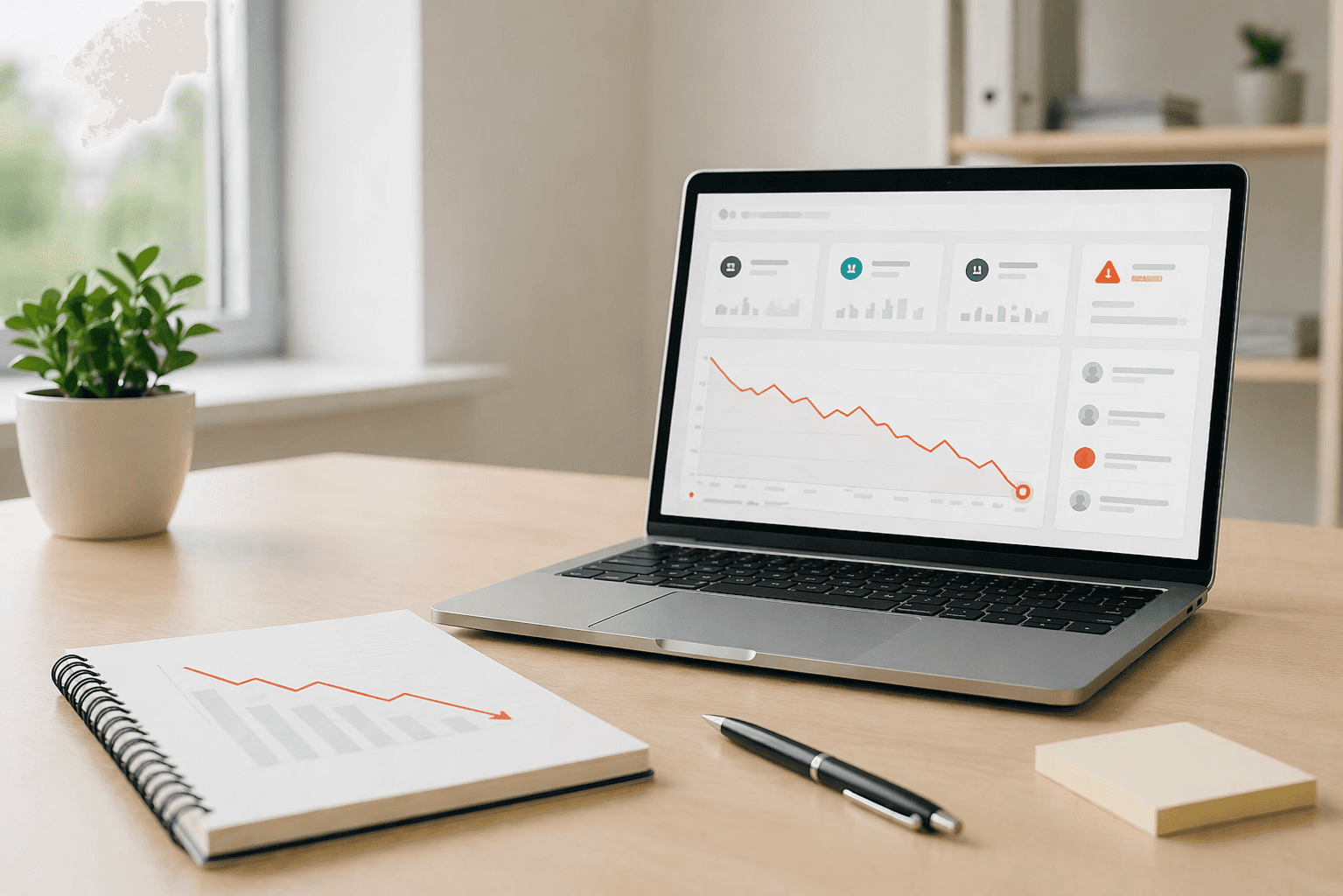
Customer usage drop detection platforms monitor product engagement patterns in real-time, alerting Customer Success and Revenue Operations teams the moment adoption declines—before renewal conversations become difficult.
TL;DR
Traditional product analytics tools (Amplitude, Mixpanel) require technical setup and don't provide account-level insights for Customer Success teams.
Effective platforms combine behavioral triggers—like 50% usage drops over 30 days or inactive power users for 14+ days—with automated Slack alerts and CRM integration.
Userlens delivers account-level product analytics specifically built for CSMs, with AI-driven health scoring that recalculates daily and contextual alerts that trigger proactive intervention workflows.
The right platform provides feature adoption tracking, seat utilization monitoring, login frequency analysis, and integration with existing Customer Success tools to prevent silent churn.
The Challenge of Early Usage Drop Detection
Most B2B SaaS companies already use product analytics platforms like Amplitude or Mixpanel, yet Customer Success teams still struggle to detect churn risk early. The problem isn't a lack of data—it's that traditional analytics tools were built for product managers running aggregate user analysis, not for CSMs managing individual account relationships.These platforms excel at tracking feature adoption across thousands of users but require technical expertise to configure queries, interpret cohort reports, and translate insights into account-specific action.
A CSM trying to understand whether Acme Corp is healthy needs to know: are the right people logging in? Which features are they using? Has engagement changed in the past two weeks? Traditional tools answer these questions through manual dashboard creation and SQL queries, creating a gap between data availability and operational use. Userlens provides usage analytics specifically designed for Customer Success workflows, delivering account-level visibility without requiring teams to build custom dashboards or write queries.
The Account-Level Visibility Problem
Product analytics platforms aggregate user behavior to find patterns, but Customer Success operates at the account level. A CSM managing 100 accounts needs to see usage rolled up by company, broken down by user role, and compared against that account's historical baseline. When a power user at a key account stops logging in for two weeks, that's a retention risk—but it's invisible in aggregate dashboards showing overall DAU trends.
Userlens solves this by organizing analytics around accounts rather than anonymous users, providing activity tracking that shows company-level behavior patterns alongside individual user engagement. The platform's activity dots give CSMs an instant visual summary showing when and how often customers interact with the product, making it immediately clear which accounts are thriving and which need attention. This account-first design means Customer Success teams can monitor adoption without translating technical metrics, identifying exactly which customers are at risk based on their specific usage context.
The Technical Setup Barrier
Traditional product analytics tools require event instrumentation, custom dashboard configuration, and ongoing maintenance by technical teams. CSMs must submit requests to product or engineering teams to track new metrics, create cohort analyses, or adjust health score calculations.
This dependency creates delays between recognizing the need for insight and actually getting actionable data. By the time a custom dashboard is built to track a specific churn signal, the at-risk accounts may have already churned.
Userlens eliminates this technical barrier with pre-configured account analytics designed for non-technical users. AI-driven health scores are defined in plain language—teams describe what healthy usage looks like, and Userlens automatically applies those criteria across every account, recalculating scores daily. This approach gives Customer Success immediate access to usage intelligence without waiting for engineering resources, allowing teams to respond to emerging churn patterns in real-time rather than weeks later.
Critical Churn Warning Signals Every Platform Should Track
Not all usage declines indicate churn risk—seasonal variations, holidays, and normal business cycles create temporary engagement dips. Effective usage drop detection requires tracking specific behavioral signals that reliably predict disengagement and renewal risk.
Sudden declines in core feature adoption—particularly drops of 50% or more over six weeks—are among the strongest churn indicators. Similarly, reduced activity from key users carries more weight than general usage fluctuations, as these individuals often act as internal champions whose disengagement signals broader organizational dissatisfaction.
Userlens monitors these critical signals by tracking feature adoption rates, how often events are triggered, and trends over time across every account. The platform's real-time alert system flags meaningful changes—like dormant power users, declining seat utilization, or abandoned core workflows—enabling teams to intervene before small issues compound into cancellation decisions.
Login Frequency and Session Patterns
Declining login frequency is often the first visible sign of disengagement. When users who previously accessed your platform daily shift to weekly logins—or stop logging in altogether—it indicates they've found workarounds, are using competitor tools, or no longer see value in your solution.
Session duration patterns provide additional context: shorter sessions suggest users are completing specific tasks without exploring additional functionality, while longer sessions indicate deeper engagement and feature discovery. Platforms should track both metrics at the user and account level, comparing current patterns against historical baselines.
Userlens provides instant visibility into activity levels across all users within an account, showing not just who logged in, but how their engagement has changed over rolling 30-day and 90-day windows. This temporal comparison reveals trends that single-point metrics miss, helping CSMs distinguish between temporary absences and sustained disengagement patterns.
Feature Adoption and Utilization Depth
Customers who use only basic features are more likely to churn than those who adopt advanced functionality. Feature adoption creates switching costs—the more workflows and integrations a customer builds around your platform, the harder it becomes to replace you.
Effective platforms track which features each account uses, how adoption has progressed since onboarding, and whether usage depth is expanding or contracting. Userlens tracks feature utilization at granular levels, showing which capabilities each account has adopted and identifying accounts that may be ready for expansion conversations. The platform's cohort creation tools allow teams to segment accounts by adoption patterns, comparing each customer's journey against peers in similar industries or use cases to identify both risk and opportunity.
Seat Utilization and Team Expansion Signals
Seat utilization—the percentage of licensed seats actively used—reveals both churn risk and expansion opportunity. Low utilization suggests customers aren't rolling out your platform broadly, limiting organizational buy-in and renewal justification. Conversely, accounts nearing full seat capacity and adding new users signal growth and deeper product dependency.
Platforms should track daily active users (DAU) relative to total licensed seats, monitor which user roles are engaging, and flag accounts with dormant licenses that indicate unused investment. Userlens provides seat-level activity tracking that shows not just aggregate utilization but identifies specific inactive users by role and department. This visibility enables targeted re-engagement campaigns for dormant users and helps CSMs build business cases for seat expansion when utilization consistently exceeds 70% across 90-day periods.
Implementing Automated Alert Workflows
The best usage drop detection platform is only effective if it delivers insights when and where teams can act on them. Automated alert workflows ensure critical signals reach the right person through their preferred communication channel, with enough context to prioritize response.
Effective systems trigger alerts based on configurable thresholds—like 50% usage drops compared to 30-day averages, or key users absent for 14 consecutive days—and deliver notifications via Slack, email, or directly within CRM platforms. Userlens sends alerts straight to Slack, providing CSMs with context about what changed, why it matters, and which playbook to activate.
The platform's integration with Salesforce and HubSpot means usage alerts appear alongside opportunity records and account timelines, giving teams a complete picture without switching between tools. This workflow automation transforms passive analytics into active intervention systems, ensuring usage drops trigger immediate outreach rather than being discovered weeks later during quarterly business reviews.
Balancing Automation with Human Judgment
While automation enables scale, effective churn prevention requires human judgment to interpret context and determine appropriate response. Not every usage drop signals churn risk—some reflect seasonality, planned vacations, or business cycles.
Platforms should augment CSM decision-making rather than replace it, surfacing signals that require attention while allowing teams to apply relationship knowledge and customer context. Userlens Agent suggests actions but keeps CSMs in control, surfacing recommendations for review so teams decide when and how to engage. The platform learns from CSM corrections—when a team member adjusts an insight or flags a false positive, the agent builds a new skill and gets smarter over time. These shared team skills scale best practices automatically, ensuring that what works for one CSM becomes available to the entire organization without requiring meetings or documentation. This human-AI collaboration model prevents alert fatigue while ensuring teams maintain strategic control over customer relationships.
Key Metrics for Usage Drop Detection Platforms
Implementing a usage drop detection platform should deliver measurable improvements in retention outcomes and team efficiency. Customer Success leaders should track both leading indicators—like time-to-intervention and alert response rates—and lagging indicators such as churn reduction and expansion revenue growth.
Teams should measure intervention success rate—the percentage of at-risk accounts successfully retained after early outreach—and compare it against baseline churn rates to quantify platform ROI.
Conclusion
Churn rarely happens overnight. By the time a renewal conversation goes sideways, the warning signs have usually been accumulating for weeks or months: a power user who stopped logging in, a core feature that quietly fell out of rotation, seats sitting dormant after a reorg. The companies that retain customers consistently aren't the ones with the fanciest analytics stacks; they're the ones whose CSMs see those signals early enough to act.
That's the real shift usage drop detection enables. Instead of waiting for quarterly business reviews to surface problems, teams get continuous visibility into how every account is actually using the product. Instead of relying on engineering to build custom dashboards, non-technical users define what healthy looks like in plain language. And instead of drowning in alerts, CSMs get contextual notifications that tell them what changed, why it matters, and what to do next.
For B2B SaaS teams managing hundreds of accounts, that difference compounds quickly. The earlier an intervention happens, the higher the save rate. Userlens is built specifically for that workflow: account-level analytics designed for CSMs, AI-driven health scoring that updates daily, and Slack-native alerts that fit into how teams already operate. If usage data is sitting in a product analytics tool your CS team can't easily use, you're leaving retention revenue on the table. The fix isn't more data; it's getting the right signals to the right people at the right time.
FAQ
How quickly can a platform detect meaningful usage drops?
Detection speed depends on alert configuration and data refresh frequency. Real-time platforms can flag sudden drops—like a key user going inactive—within 24 hours, while trend-based alerts identifying gradual 30-day declines may take 1-2 weeks to trigger with statistical confidence. The best platforms offer configurable sensitivity, allowing teams to set immediate alerts for critical signals (power user absence) while using longer windows for trend confirmation (gradual feature adoption decline). Userlens monitors accounts continuously and recalculates health scores daily, enabling detection of emerging patterns within days rather than weeks.
Can usage drop detection platforms integrate with existing Customer Success workflows?
Modern platforms prioritize integration with CRM systems (Salesforce, HubSpot), communication tools (Slack, Microsoft Teams), and Customer Success software (Gainsight, Totango). Userlens provides seamless integrations that sync usage data with CRM records, deliver alerts via Slack, and populate account timelines with engagement events. This eliminates context-switching and ensures usage intelligence appears within existing CSM workflows rather than requiring separate tool adoption. Integration quality directly impacts adoption rates—platforms that require manual data export and analysis see lower team engagement than those delivering insights in-context.
What usage metrics are most predictive of churn for B2B SaaS companies?
The most predictive metrics vary by product, but research consistently identifies declining login frequency, reduced core feature usage, low seat utilization relative to licenses, and inactive power users as leading indicators. For B2B accounts, team-level engagement matters more than individual user metrics—accounts with adoption concentrated in 1-2 users face higher churn risk than those with distributed usage across departments. Retention playbooks should track both individual metrics and combined patterns, as multiple weak signals together often predict churn more accurately than any single metric exceeding a threshold.
How do usage drop detection platforms prevent alert fatigue?
Alert fatigue occurs when teams receive too many notifications or when false positives erode trust in the system. Effective platforms use smart thresholds that balance sensitivity with specificity, segmenting accounts by size and lifecycle stage to apply appropriate monitoring criteria. AI-powered systems learn from CSM feedback, reducing false positives over time by incorporating corrections into their detection models.
Userlens addresses alert fatigue by providing contextual notifications that explain why an alert matters and what action to take, rather than simply flagging raw metric changes. They can also be setup so that they serve the user's exact requirements for an alert. The platform's learning capability means it gets more accurate with use, reducing noise while ensuring critical signals are never missed.
Customer usage drop detection platforms monitor product engagement patterns in real-time, alerting Customer Success and Revenue Operations teams the moment adoption declines—before renewal conversations become difficult.
TL;DR
Traditional product analytics tools (Amplitude, Mixpanel) require technical setup and don't provide account-level insights for Customer Success teams.
Effective platforms combine behavioral triggers—like 50% usage drops over 30 days or inactive power users for 14+ days—with automated Slack alerts and CRM integration.
Userlens delivers account-level product analytics specifically built for CSMs, with AI-driven health scoring that recalculates daily and contextual alerts that trigger proactive intervention workflows.
The right platform provides feature adoption tracking, seat utilization monitoring, login frequency analysis, and integration with existing Customer Success tools to prevent silent churn.
The Challenge of Early Usage Drop Detection
Most B2B SaaS companies already use product analytics platforms like Amplitude or Mixpanel, yet Customer Success teams still struggle to detect churn risk early. The problem isn't a lack of data—it's that traditional analytics tools were built for product managers running aggregate user analysis, not for CSMs managing individual account relationships.These platforms excel at tracking feature adoption across thousands of users but require technical expertise to configure queries, interpret cohort reports, and translate insights into account-specific action.
A CSM trying to understand whether Acme Corp is healthy needs to know: are the right people logging in? Which features are they using? Has engagement changed in the past two weeks? Traditional tools answer these questions through manual dashboard creation and SQL queries, creating a gap between data availability and operational use. Userlens provides usage analytics specifically designed for Customer Success workflows, delivering account-level visibility without requiring teams to build custom dashboards or write queries.
The Account-Level Visibility Problem
Product analytics platforms aggregate user behavior to find patterns, but Customer Success operates at the account level. A CSM managing 100 accounts needs to see usage rolled up by company, broken down by user role, and compared against that account's historical baseline. When a power user at a key account stops logging in for two weeks, that's a retention risk—but it's invisible in aggregate dashboards showing overall DAU trends.
Userlens solves this by organizing analytics around accounts rather than anonymous users, providing activity tracking that shows company-level behavior patterns alongside individual user engagement. The platform's activity dots give CSMs an instant visual summary showing when and how often customers interact with the product, making it immediately clear which accounts are thriving and which need attention. This account-first design means Customer Success teams can monitor adoption without translating technical metrics, identifying exactly which customers are at risk based on their specific usage context.
The Technical Setup Barrier
Traditional product analytics tools require event instrumentation, custom dashboard configuration, and ongoing maintenance by technical teams. CSMs must submit requests to product or engineering teams to track new metrics, create cohort analyses, or adjust health score calculations.
This dependency creates delays between recognizing the need for insight and actually getting actionable data. By the time a custom dashboard is built to track a specific churn signal, the at-risk accounts may have already churned.
Userlens eliminates this technical barrier with pre-configured account analytics designed for non-technical users. AI-driven health scores are defined in plain language—teams describe what healthy usage looks like, and Userlens automatically applies those criteria across every account, recalculating scores daily. This approach gives Customer Success immediate access to usage intelligence without waiting for engineering resources, allowing teams to respond to emerging churn patterns in real-time rather than weeks later.
Critical Churn Warning Signals Every Platform Should Track
Not all usage declines indicate churn risk—seasonal variations, holidays, and normal business cycles create temporary engagement dips. Effective usage drop detection requires tracking specific behavioral signals that reliably predict disengagement and renewal risk.
Sudden declines in core feature adoption—particularly drops of 50% or more over six weeks—are among the strongest churn indicators. Similarly, reduced activity from key users carries more weight than general usage fluctuations, as these individuals often act as internal champions whose disengagement signals broader organizational dissatisfaction.
Userlens monitors these critical signals by tracking feature adoption rates, how often events are triggered, and trends over time across every account. The platform's real-time alert system flags meaningful changes—like dormant power users, declining seat utilization, or abandoned core workflows—enabling teams to intervene before small issues compound into cancellation decisions.
Login Frequency and Session Patterns
Declining login frequency is often the first visible sign of disengagement. When users who previously accessed your platform daily shift to weekly logins—or stop logging in altogether—it indicates they've found workarounds, are using competitor tools, or no longer see value in your solution.
Session duration patterns provide additional context: shorter sessions suggest users are completing specific tasks without exploring additional functionality, while longer sessions indicate deeper engagement and feature discovery. Platforms should track both metrics at the user and account level, comparing current patterns against historical baselines.
Userlens provides instant visibility into activity levels across all users within an account, showing not just who logged in, but how their engagement has changed over rolling 30-day and 90-day windows. This temporal comparison reveals trends that single-point metrics miss, helping CSMs distinguish between temporary absences and sustained disengagement patterns.
Feature Adoption and Utilization Depth
Customers who use only basic features are more likely to churn than those who adopt advanced functionality. Feature adoption creates switching costs—the more workflows and integrations a customer builds around your platform, the harder it becomes to replace you.
Effective platforms track which features each account uses, how adoption has progressed since onboarding, and whether usage depth is expanding or contracting. Userlens tracks feature utilization at granular levels, showing which capabilities each account has adopted and identifying accounts that may be ready for expansion conversations. The platform's cohort creation tools allow teams to segment accounts by adoption patterns, comparing each customer's journey against peers in similar industries or use cases to identify both risk and opportunity.
Seat Utilization and Team Expansion Signals
Seat utilization—the percentage of licensed seats actively used—reveals both churn risk and expansion opportunity. Low utilization suggests customers aren't rolling out your platform broadly, limiting organizational buy-in and renewal justification. Conversely, accounts nearing full seat capacity and adding new users signal growth and deeper product dependency.
Platforms should track daily active users (DAU) relative to total licensed seats, monitor which user roles are engaging, and flag accounts with dormant licenses that indicate unused investment. Userlens provides seat-level activity tracking that shows not just aggregate utilization but identifies specific inactive users by role and department. This visibility enables targeted re-engagement campaigns for dormant users and helps CSMs build business cases for seat expansion when utilization consistently exceeds 70% across 90-day periods.
Implementing Automated Alert Workflows
The best usage drop detection platform is only effective if it delivers insights when and where teams can act on them. Automated alert workflows ensure critical signals reach the right person through their preferred communication channel, with enough context to prioritize response.
Effective systems trigger alerts based on configurable thresholds—like 50% usage drops compared to 30-day averages, or key users absent for 14 consecutive days—and deliver notifications via Slack, email, or directly within CRM platforms. Userlens sends alerts straight to Slack, providing CSMs with context about what changed, why it matters, and which playbook to activate.
The platform's integration with Salesforce and HubSpot means usage alerts appear alongside opportunity records and account timelines, giving teams a complete picture without switching between tools. This workflow automation transforms passive analytics into active intervention systems, ensuring usage drops trigger immediate outreach rather than being discovered weeks later during quarterly business reviews.
Balancing Automation with Human Judgment
While automation enables scale, effective churn prevention requires human judgment to interpret context and determine appropriate response. Not every usage drop signals churn risk—some reflect seasonality, planned vacations, or business cycles.
Platforms should augment CSM decision-making rather than replace it, surfacing signals that require attention while allowing teams to apply relationship knowledge and customer context. Userlens Agent suggests actions but keeps CSMs in control, surfacing recommendations for review so teams decide when and how to engage. The platform learns from CSM corrections—when a team member adjusts an insight or flags a false positive, the agent builds a new skill and gets smarter over time. These shared team skills scale best practices automatically, ensuring that what works for one CSM becomes available to the entire organization without requiring meetings or documentation. This human-AI collaboration model prevents alert fatigue while ensuring teams maintain strategic control over customer relationships.
Key Metrics for Usage Drop Detection Platforms
Implementing a usage drop detection platform should deliver measurable improvements in retention outcomes and team efficiency. Customer Success leaders should track both leading indicators—like time-to-intervention and alert response rates—and lagging indicators such as churn reduction and expansion revenue growth.
Teams should measure intervention success rate—the percentage of at-risk accounts successfully retained after early outreach—and compare it against baseline churn rates to quantify platform ROI.
Conclusion
Churn rarely happens overnight. By the time a renewal conversation goes sideways, the warning signs have usually been accumulating for weeks or months: a power user who stopped logging in, a core feature that quietly fell out of rotation, seats sitting dormant after a reorg. The companies that retain customers consistently aren't the ones with the fanciest analytics stacks; they're the ones whose CSMs see those signals early enough to act.
That's the real shift usage drop detection enables. Instead of waiting for quarterly business reviews to surface problems, teams get continuous visibility into how every account is actually using the product. Instead of relying on engineering to build custom dashboards, non-technical users define what healthy looks like in plain language. And instead of drowning in alerts, CSMs get contextual notifications that tell them what changed, why it matters, and what to do next.
For B2B SaaS teams managing hundreds of accounts, that difference compounds quickly. The earlier an intervention happens, the higher the save rate. Userlens is built specifically for that workflow: account-level analytics designed for CSMs, AI-driven health scoring that updates daily, and Slack-native alerts that fit into how teams already operate. If usage data is sitting in a product analytics tool your CS team can't easily use, you're leaving retention revenue on the table. The fix isn't more data; it's getting the right signals to the right people at the right time.
FAQ
How quickly can a platform detect meaningful usage drops?
Detection speed depends on alert configuration and data refresh frequency. Real-time platforms can flag sudden drops—like a key user going inactive—within 24 hours, while trend-based alerts identifying gradual 30-day declines may take 1-2 weeks to trigger with statistical confidence. The best platforms offer configurable sensitivity, allowing teams to set immediate alerts for critical signals (power user absence) while using longer windows for trend confirmation (gradual feature adoption decline). Userlens monitors accounts continuously and recalculates health scores daily, enabling detection of emerging patterns within days rather than weeks.
Can usage drop detection platforms integrate with existing Customer Success workflows?
Modern platforms prioritize integration with CRM systems (Salesforce, HubSpot), communication tools (Slack, Microsoft Teams), and Customer Success software (Gainsight, Totango). Userlens provides seamless integrations that sync usage data with CRM records, deliver alerts via Slack, and populate account timelines with engagement events. This eliminates context-switching and ensures usage intelligence appears within existing CSM workflows rather than requiring separate tool adoption. Integration quality directly impacts adoption rates—platforms that require manual data export and analysis see lower team engagement than those delivering insights in-context.
What usage metrics are most predictive of churn for B2B SaaS companies?
The most predictive metrics vary by product, but research consistently identifies declining login frequency, reduced core feature usage, low seat utilization relative to licenses, and inactive power users as leading indicators. For B2B accounts, team-level engagement matters more than individual user metrics—accounts with adoption concentrated in 1-2 users face higher churn risk than those with distributed usage across departments. Retention playbooks should track both individual metrics and combined patterns, as multiple weak signals together often predict churn more accurately than any single metric exceeding a threshold.
How do usage drop detection platforms prevent alert fatigue?
Alert fatigue occurs when teams receive too many notifications or when false positives erode trust in the system. Effective platforms use smart thresholds that balance sensitivity with specificity, segmenting accounts by size and lifecycle stage to apply appropriate monitoring criteria. AI-powered systems learn from CSM feedback, reducing false positives over time by incorporating corrections into their detection models.
Userlens addresses alert fatigue by providing contextual notifications that explain why an alert matters and what action to take, rather than simply flagging raw metric changes. They can also be setup so that they serve the user's exact requirements for an alert. The platform's learning capability means it gets more accurate with use, reducing noise while ensuring critical signals are never missed.
© All rights reserved. Userlens 2026
© All rights reserved. Userlens 2026
© All rights reserved. Userlens 2026